Physical Address
Victory Est, Ogombo Ajah, Eti-Osa, Lekki 101245, Lagos
Physical Address
Victory Est, Ogombo Ajah, Eti-Osa, Lekki 101245, Lagos

Nigeria Financial News, Stock Market Data, Economy & Market Analysis
Nigeria Financial News, Stock Market Data, Economy & Market Analysis
Setting up an emergency fund in Nigeria while navigating through the turbulent state of Nigeria’s macroeconomy is undoubtedly one of the most important things for sustaining oneself financially in the future. When I consider today’s financial situation in terms of growing inflation, unforeseen changes in the value of money, and always lurking chances of losing your job, I understand how foolish it was to postpone setting aside an emergency fund “for later.” If you are reading this, chances are that you are already experiencing all the effects of this economic reality. It is important to understand that your financial safety will not solely depend on having a large salary but also on the process of creating an emergency fund in Nigeria.
Through my study of our local economy, however, it is evident that most individuals regard the emergency fund in Nigeria as a luxury. They see the emergency fund as something that will only matter after they have “arrived.” In the meantime, I inform my audience that it is precisely because they have not “arrived” that they need an emergency fund. This is because any unexpected expenses such as a car breakdown, medical costs, or salary delay may land them in high-interest debt.
The emergency fund is not supposed to be the key to making you rich. Instead, it should help you stay away from poverty whenever something unexpected occurs. Through this proactive approach of safeguarding your finances, you gain the luxury of making sound judgments.
For an emergency fund during a turbulent time in the macro economy, we have to go beyond the general guidance. There is a need for specificity based on the fact that we live in Nigeria where our purchasing power is put to constant test.
Any advice out there says to “save six months’ salary.” Today’s environment makes it difficult to do so and quite frankly, unrealistic. In my case, I determine my minimal burn rate. The minimal amount I need to have in order to put a roof over my head, keep food on the table and my basic channel of communication (data/electricity bill) alive and kicking for a month. No subscriptions, no “black tax,” and no restaurant visits. This is your basic survival number.
I recommend reviewing at least three months of bank statements and categorizing expenses into:
Your emergency fund in Nigeria should primarily cover essential expenses.
According to Cowrywise, the notion of saving six months’ worth of expenses seems too lofty and distant? Stop thinking about the peak and start thinking about a foundation instead. The “Starter Shield” amount of ₦100,000 – ₦200,000 usually covers all the emergency expenses such as buying a new phone, some medicine or arranging for your urgent transportation needs without having to go into the hands of loan sharks. And once you achieve this, you have already escaped the vicious cycle of borrowing in emergencies.
Start with realistic targets:
The habit matters more than the initial amount. Small contributions accumulate significantly over time.
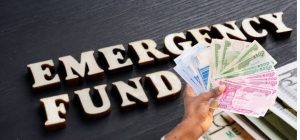
If your emergency fund in Nigeria is in the same account where you get your salary or money from your business, you will end up spending it. I know firsthand how easy it is to convince yourself about a one-time withdrawal, no matter how much you want to avoid it. It should be kept in a different account for a purpose and be less easily accessible. Digital savings accounts which help you to set target amounts work great for this purpose.
Relying on yourself to make a saving at the end of the month won’t work because in my experience there is nothing left by then. Set yourself up an automated transfer to a specific amount right after you get paid each month. Even if all you can afford at first is 5%, it does not matter. What matters more is consistency rather than the size of the sum.
One of the most common blunders that I have noticed Nigerians making is keeping their emergency fund in a zero-interest savings account. Although the money has to be liquid, keeping it idle at such a time when there is rampant inflation simply implies that the value of the money is gradually eroding.
My strategy is to keep the money in a high-interest-bearing savings account or money market mutual funds where the money will be earning some income for me, hence fighting inflation, while being accessible whenever I need it the most. Bear in mind that this is not an investment but preservation of my money.
I cannot emphasize enough that your emergency fund in Nigeria is not meant for vacation, buying an expensive item such as an iPhone, or funding your side business. My rule of thumb is: if I do not pay for this today, will anything disastrous happen to me?
Financial independence involves not only selecting the right investments but also becoming aware of your own psychology and the practicalities of the local market. In times of unstable macroeconomics, constructing an emergency fund in Nigeria cannot be done quickly or overnight, it is a commitment to yourself and to your own security.
Don’t let today’s economic chatter take your eyes off the ball when it comes to these basic practices. Make use of the resources at your disposal and stick to them. When you construct this financial fortress, you are making a purchase on the most valuable investment of all: security in any market situation.