Physical Address
Victory Est, Ogombo Ajah, Eti-Osa, Lekki 101245, Lagos
Physical Address
Victory Est, Ogombo Ajah, Eti-Osa, Lekki 101245, Lagos

Nigeria Financial News, Stock Market Data, Economy & Market Analysis
Nigeria Financial News, Stock Market Data, Economy & Market Analysis

When analyzing Nigeria’s Economy in 2026: Opportunities and Risks, my primary goal as an investor is absolute clarity. Navigating the current financial climate requires us to separate superficial noise from deep macroeconomic shifts. If you have been managing capital in this market for any length of time, you already know that our commercial space is undergoing one of its most radical restructurings in recent history. The fiscal adjustments that felt so painful over the last two years are finally showing up in the baseline data, presenting a fascinating environment filled with both immense structural tailwinds and glaring vulnerabilities.
From my personal vantage point, managing a diverse capital allocation strategy means looking past standard media headlines to evaluate exactly how real numbers affect everyday business choices. Major financial organizations like the World Bank and elite domestic consultancies are projecting real Gross Domestic Product growth to expand somewhere between 4.0% and 4.3% this year. Compared to a global expansion average of roughly 3.1%, our local growth rate highlights a massive economic acceleration engine. Yet, this high growth scenario remains tightly constrained by sectoral concentration, execution bottlenecks, and localized production ceilings. This comprehensive breakdown reflects my own boots on the ground framework for deploying capital efficiently while keeping personal risk tightly mitigated.
The primary reason our economic landscape is showing a resilient growth profile this year is the slow consolidation of previous fiscal and monetary adjustments. When I look closely at the underlying data, the stabilization of the local currency within the ₦1,500 to ₦1,580 per dollar range has given corporate boards something they desperately missed during previous cycles: predictability. Businesses can finally calculate import logistics and long-term capital expenditure plans without worrying about an overnight currency collapse.
At the same time, domestic inflation has started to moderate, trending downward toward the Central Bank of Nigeria’s target zone. This cooling of macro pricing pressures is a welcome relief, effectively restoring a degree of consumer purchasing power across our major cities. According to data points tracked by leading consumer spend indicators, discretionary retail spending has steadily ticked upward, particularly within urban service sectors, aviation, and lifestyle retail. This tells me that the domestic household balance sheet is gradually repairing itself, though the recovery remains highly uneven.
To ensure my personal allocation model stays perfectly aligned with certified regulatory updates and institutional filings, I continuously track real-time macro announcements. Checking ongoing trade data and regulatory compliance frameworks directly via the Nigerian Exchange Group Official Portal is a mandatory part of my weekly research process. It ensures my choices are driven by cold, hard data rather than emotional commentary on social media.
When exploring the core layout of Nigeria’s Economy in 2026: Opportunities and Risks, certain high performing sectors instantly stand out as exceptional wealth generation vectors. The corporate environment is no longer rewarding speculative assets; instead, it is heavily favoring cash-generative, vertically integrated entities that solve real structural problems.
We are currently witnessing a historic deep-liquidity wave across the local bourse. The planned listing of massive corporate industrial giants alongside scheduled public offerings for the Nigerian National Petroleum Corporation has the potential to push total market capitalization to record-breaking heights. For equity participants, these colossal listings provide an incredible avenue to gain direct exposure to institutional-grade, export-ready assets. The massive capital inflows triggered by these listings will inevitably deepen local liquidity pools, attracting long-term foreign portfolio investors back into our financial system.
Another massive opportunity lies in our incredibly vibrant technology space. The rapid adoption of digital payment tools and cloud infrastructure has allowed local small and medium enterprises to scale their sales models far beyond physical boundaries. I am particularly focused on tech-enabled services and logistics platforms that streamline domestic supply chains. Businesses integrating advanced digital workflows are realizing significant margin expansions, giving them a massive edge over slower, legacy competitors.
To get a clearer picture of how these changing structural realities affect local investment setups, I always cross-reference my positions with advanced technical analytical tools. Monitoring real-time sector indices, macro volume spikes, and capital flows through the TradingView Nigerian Market Summary gives me an invaluable visual guide to exactly where institutional money is clustering across our domestic financial markets.
The localized production of refined petroleum products has completely altered our sub-Saharan energy dynamic. By moving away from decades of expensive, fuel-import reliance, the broader economy is systematically plugging a massive foreign exchange drain. This localized manufacturing capacity provides an excellent protective buffer against external global shocks, giving our domestic manufacturing and transportation ecosystems a far more stable cost foundation over the long term.
We cannot genuinely master the dynamics of Nigeria’s Economy in 2026: Opportunities and Risks without conducting a brutal, entirely transparent assessment of the structural threats facing our capital allocations. Every high-yielding opportunity carries a corresponding risk profile that can wipe out undisciplined investors.
Despite the massive strides made in regional refining capacity, the domestic private sector is still battling a highly restrictive production ceiling. High energy costs, driven by a historically unstable national power grid, force major corporate manufacturing plants to rely heavily on expensive, alternative captive energy infrastructures. If a business cannot achieve energy independence through sustainable or alternative fuel conversions, its operating margins will continue to get squeezed by localized logistical bottlenecks.
While recent analytical reports show a modest 4% decline in our overall sovereign debt service burden, saving the treasury roughly ₦500 billion in fiscal space, debt sustainability remains a major concern. When a country’s projected debt repayments closely mirror its capital expenditure allocations, the government is forced into a challenging fiscal balancing act. For investors, this means keeping a very close watch on tax policy updates, as the state will continuously seek to broaden its internal tax administration frameworks to drive public revenues.
There is still a very noticeable disconnect between macroeconomic stabilization and the everyday microeconomic realities of consumers. While corporate earnings look fantastic on paper, real household purchasing power is recovering slowly. The latest enterprise surveys indicate that businesses are facing intense customer retention challenges. Consumers are becoming hyper-sensitive to price increases, forcing brands to strip down profit margins or completely reinvent their value propositions to retain volume share against lower-cost, highly agile local competitors.
To dive deeper into how these complex economic elements influence daily capital choices and corporate income plays, take a moment to review this practical media breakdown regarding Dividend paying stocks to look out for in the market. Gaining a clear understanding of how these larger industrial cycles affect the cash distributions of local corporations is an essential skill for protecting your long-term capital stability.
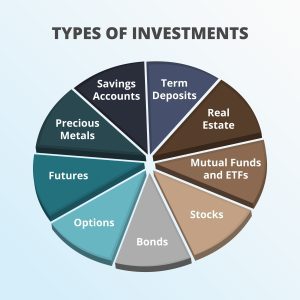
Given the complex layout of Nigeria’s Economy in 2026: Opportunities and Risks, I refuse to let my hard-earned capital sit idly in low-yield savings accounts where inflationary forces can quietly erode its purchasing power. My active investment blueprint is divided into three distinct, highly disciplined buckets:
Securing High-Yield Fixed Income Anchors: I am maintaining a solid foundational layer of capital in premium sovereign debt instruments. By locking in competitive yields through primary market sovereign bills and development bonds, I secure a predictable, tax-free income stream that acts as an ideal defense during periods of market volatility.
Targeting Resilient Blue-Chip Equities: I am selectively expanding my equity footprint, focusing entirely on high-performing banking corporations, dominant consumer staple providers, and vertically integrated industrial conglomerates that demonstrate exceptionally strong cash positions and sustainable dividend distribution records.
Prioritizing Agility and Liquid Capital Buffers: I am avoiding over-leveraged corporate assets with massive variable-debt exposures. Keeping an ultra-clean, highly liquid investment balance ensures I have the financial flexibility to aggressively pounce on massive primary market listings the exact moment they open to the public.
Building lasting financial sovereignty in a rapidly evolving economy is never a game of luck or speculative trading. It is the predictable outcome of meticulous research, deep structural preparation, and absolute emotional control. Gaining a comprehensive understanding of Nigeria’s Economy in 2026: Opportunities and Risks is your ultimate guide to moving from an anxious spectator into a highly strategic participant in our national growth story.
Instead of letting short-term policy updates throw you off balance or allowing a fear of missing out to rush your deployment timelines, take a step back and move with calculated precision. Audit your liquidity profiles, align your capital with sectors that possess authentic competitive moats, ignore unverified panic across public chat rooms, and allow the compounding power of well-chosen domestic assets to build a magnificent financial fortress for you and your family. The long-term choices you make today will define your financial position for years to come.