Physical Address
Victory Est, Ogombo Ajah, Eti-Osa, Lekki 101245, Lagos
Physical Address
Victory Est, Ogombo Ajah, Eti-Osa, Lekki 101245, Lagos
Nigeria Financial News, Stock Market Data, Economy & Market Analysis
Nigeria Financial News, Stock Market Data, Economy & Market Analysis
Nigeria's cost of credit keeps rising as the MPR holds at 26.5%. Here's why borrowers are choosing cheaper capital over debt.
I have been reporting on Nigeria’s banking system for the last six years, and the most surprising development for me this year is that Nigerians are finally giving up on trying to beat inflation by taking loans. They are now choosing to avoid debts altogether, even if that means saving less and less.
That may sound surprising, but there is a very simple explanation, which has to do with the fact that the old rule of thumb in personal finance, according to which one should take loans when inflation is high in order to buy assets, is no longer working.
The Central Bank of Nigeria’s Monetary Policy Committee kept the Monetary Policy Rate (MPR) at 26.5% at its July 2026 meeting, the second consecutive hold after decreasing the rate by 50 basis points at the February 2026 meeting. The headline inflation was at 15.9% in June, having risen for the second consecutive month, after eleven months of declines, reports Vanguard.
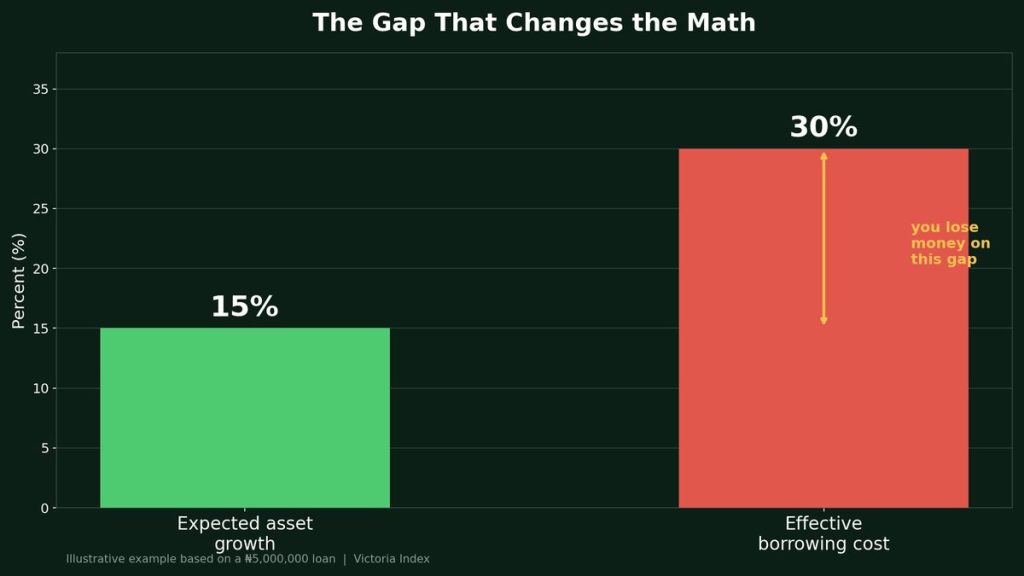
Let’s do the math on this one. At the MPR of 26.5%, corporate lending rates for Nigerian individuals and small businesses default to over 30%, typically adding 5-10% margin for banks. With the MPR at the said level, if I borrow money to buy an asset that appreciates at the rate of 15% per annum, which is inflation, I am already losing money on the rate differential. If the item purchased is to appreciate at the same rate as inflation, I am losing money on the deal before I make a profit. Every bank borrower in the country is already doing this maths before going to their lenders in Abuja, Lagos, and Port Harcourt.
The Cash Reserve Ratio (CRR) is another variable affecting lending rates. From 2025 through 2026, the CBN has maintained the CRR at 45% for deposit money banks and 16% for merchant banks, constraining the amount of funds available for lending, which explains why lending rates have not decreased significantly despite the reductions in the MPR.
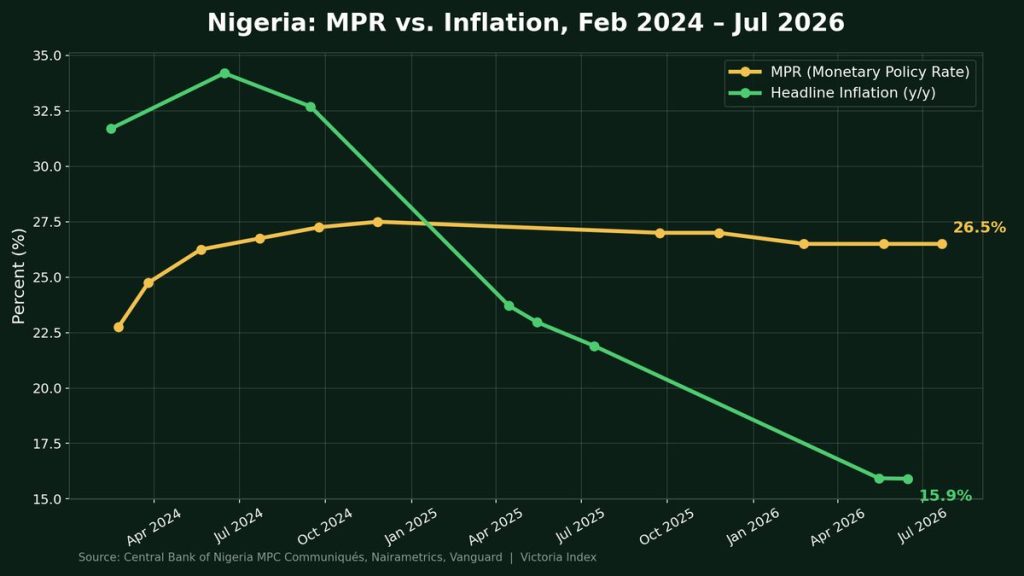
The assumption that underpins borrowing to hedge inflation is that the rate of return on the asset bought with the borrowed money should exceed the cost of borrowing. This is no longer the case; the premium has vanished, and in some instances, the cost of borrowing exceeds the returns.
I have seen clients and readers ask this question and do the maths. At 30%, the rate of return on real estate, stocks, and other assets purchased with the borrowed amount should be more significant than the cost of funds in order to generate profit after servicing the debt. With the current state of Nigeria’s economy, few assets have the potential to generate returns substantially higher than inflation, let alone the cost of funding.
What I’m seeing are clients and readers questioning the very idea that funding a venture with debt is the best option. Even while inflation continues to erode wealth, businesses and individuals are searching for ways to profitably fund their aspirations and goals.
Do the math on what that means for an actual borrower. At an MPR of 26.5%, commercial lending rates for individuals and small businesses typically land well above 30% once bank margins are added. If you borrow ₦5 million to buy an asset expected to appreciate 15% a year, roughly in line with inflation, you are losing money on the spread before you have earned a single naira. The debt is growing faster than the asset. This is the arithmetic every borrower in Lagos, Abuja, and Port Harcourt is quietly running before they sign a loan agreement.
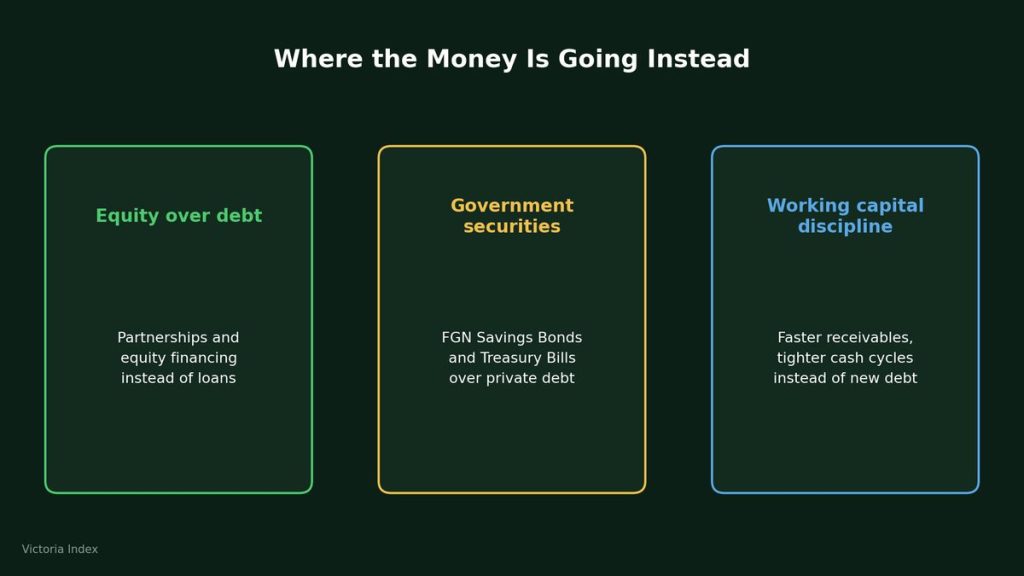
Here are three trends I’ve noticed among SMEs and investors:
If you have existing debts or are considering incurring new ones, here are some crucial considerations:
Your debts should allow you to accomplish something meaningful in your life, not just lose money. I’m not suggesting that you shouldn’t take loans; rather, I’m saying that before taking on large amounts of debt, you should be aware of all of your options, including those that may be less costly and hence more appealing.
The MPC’s next steps will be critical in the near term. If the headline inflation begins to fall, there is room for further reductions in the MPR, which would result in lower corporate lending rates. However, because the rate has been rising for the last two months, the MPC may be hesitant to reduce it in order to avoid jeopardizing the progress made toward curbing inflation.
Until then, all bets are on the Nigerian borrowers, who are already calculating that cheaper capital will always beat inflation. If you are weighing your own options, our guide to smart investment strategies for young Nigerians is a useful next read.
This article is for informational purposes and does not constitute financial advice. Interest rates, inflation figures, and monetary policy positions cited are accurate as of publication and are subject to change following future MPC meetings. Speak with a licensed financial advisor before making borrowing or investment decisions.
Sources: Central Bank of Nigeria Monetary Policy Decisions · Nairametrics · Vanguard · Trading Economics · Debt Management Office Nigeria